Cybersecurity 2026 Forecast and Why I am Scared
If you’re celebrating the arrival of a new year, you’re not alone. The party mood outside feels like a fresh start and a clean slate. But…

If you’re celebrating the arrival of a new year, you’re not alone. The party mood outside feels like a fresh start and a clean slate. But for anyone plugged into the digital world, 2026 feels less like a reset and more like a reckoning.
Over the past few years, we treated artificial intelligence like a pet project: a novelty at best, a productivity booster at worst. But that era is over. The tech we once dismissed as cute is now a weapon, a rapid-moving force that will reshape both how attacks unfold and how defenses must respond.
1. The Era of Autonomous Attacks Has Begun
For decades, cybersecurity operated under one assumption: humans were behind the keyboard. Hackers had cognitive limits , they burned out, made mistakes, and attacked one target at a time.
In 2026, we’re entering what industry analysts call the age of agentic AI which is autonomous AI that doesn’t just respond to prompts, but plans, initiates, and executes attacks independently. These are digital agents capable of mapping networks,identifying vulnerabilities, launching campaigns and adapting in real time.
Several industry forecasts warn that autonomous AI agents will redefine offensive operations, enabling attackers to execute thousands of targeted intrusions simultaneously.
Traditional signature-based defenses simply aren’t built for this kind of scale.
2. Seeing Is Believing Until It Isn’t
Trust used to be tied to our senses. If you saw someone’s face on a video call, or heard their voice, you assumed authenticity.
That assumption is now obsolete.
Sophisticated generative AI can fabricate real-time digital doppelgängers video and audio clones that react organically, carry context, and are nearly indistinguishable from the genuine person. And they’re not static deepfakes; they’re interactive, responsive, and convincingly alive.
This creates a chilling scenario where identity is no longer proven by what you see or hear as it becomes something you can only verify cryptographically.
One major shift experts emphasize is the convergence of identity management with core infrastructure security especially as AI agents, automation, and machine-to-machine systems proliferate.

3. Identity Is the New Perimeter
The old perimeter firewalls, network boundaries, static defenses is nearly dead.
A growing consensus in cybersecurity forecasts for 2026 stresses that the identity layer has become the primary battlefield. Attackers won’t just target endpoints; they’ll target credentials, tokens, keys, and the authentication systems that grant access to everything else.
Why?
Because identity is the weakest link. Federated logins, stale credentials, API keys stored in code, unattended service accounts and others, these are accessible attack surfaces that can be manipulated by automated agents faster than defenders can audit them manually.
By 2026, organizations that treat identity as infrastructure , not just a checkbox , will have a strategic advantage.
4. Quantum Looms
There’s another tectonic shift happening beneath the surface: quantum computing.
Today’s encryption standards : RSA, ECC, and other classical schemes are secure against classical computation. But quantum computers fundamentally change the math.
Industry warnings (and early government advisories) point to a future where encrypted traffic, once thought untouchable, could be decrypted in seconds once quantum-capable machines arrive. And the risk isn’t down the road state actors and advanced threat groups are already harvesting encrypted data with a strategy called store now, decrypt later.
The consequence? If your data needs to remain safe for more than a few years, it may already be compromised long before any quantum breakthrough.

5. AI vs. AI
While attackers amplify their capabilities with agentic AI, defenders are also integrating AI into every layer of security from threat detection to automated response.
But it’s not symmetrical.
Attackers can use AI to tailor phishing at scale, craft flawless social-engineering content, evade anomaly detection, and exploit predictive models. Defenders, meanwhile, are investing in AI that supplements human analysts, augments threat hunting, and accelerates response times.
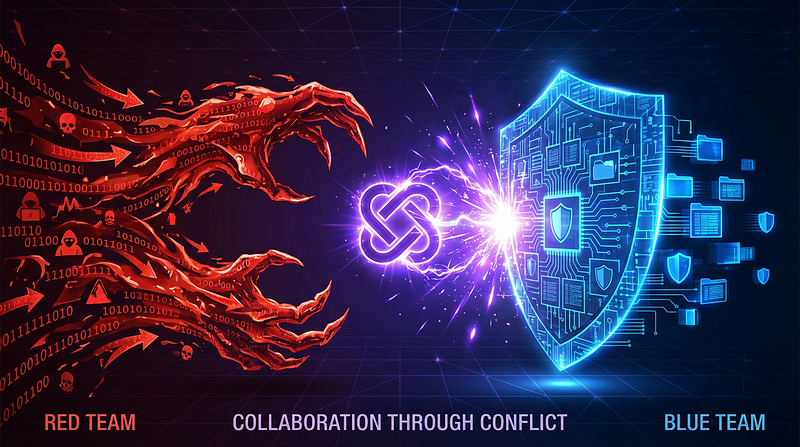
This dynamic creates an AI arms race, where the balance isn’t about replacing humans, it’s about augmenting the few humans who can actually interpret context, intent, and strategy.
Final Thought
2025 was the tutorial. It was the year we played with tools but 2026 is the year we reconcile with what we built. Cybersecurity won’t be defined by software patches or firewalls anymore. It will be defined by cryptographic identity, autonomous defense systems, AI governance, and human–machine collaboration at scale.
If there’s one mindset shift that matters most: trust nothing by default — and verify everything cryptographically.