
Comprehensive Cyber Security Notes and Learning System
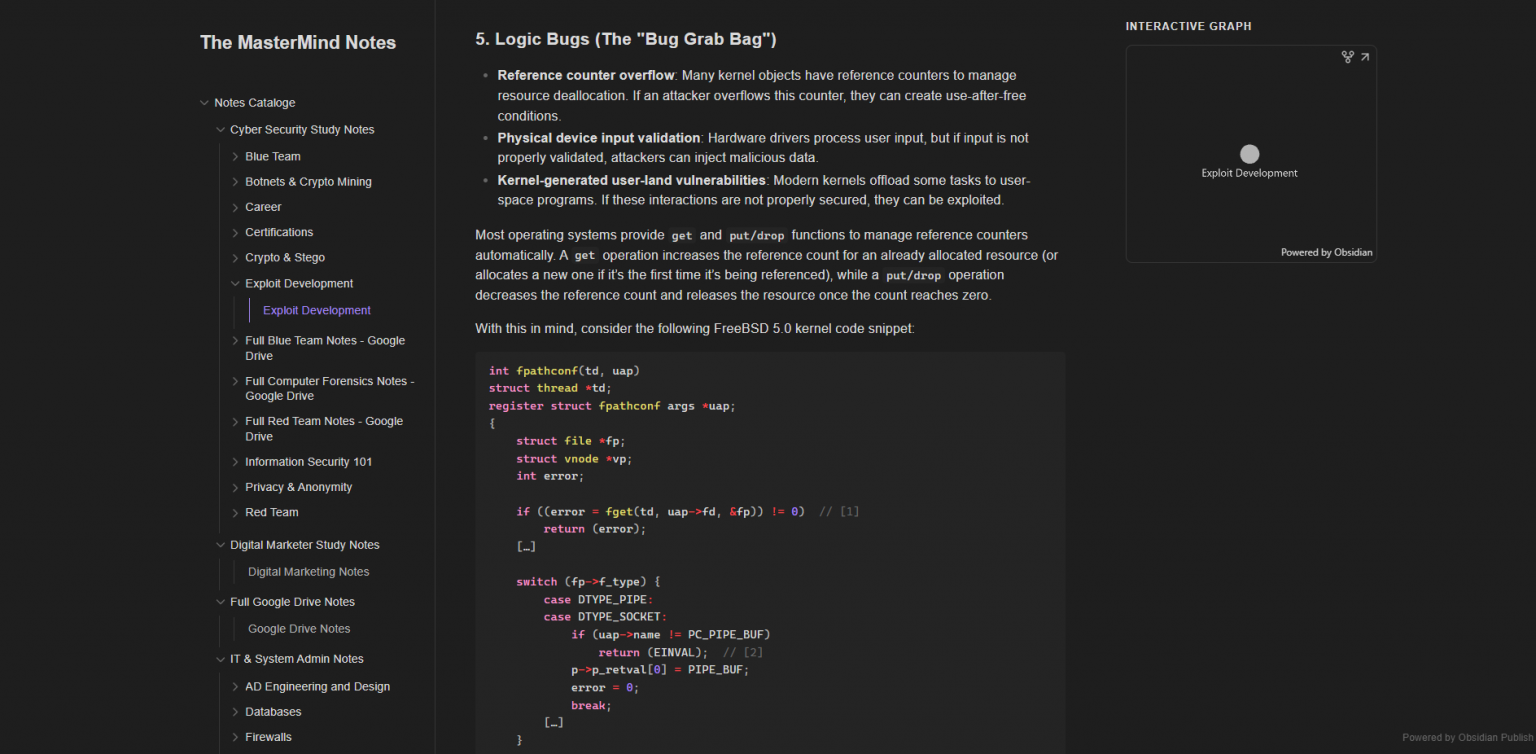
The Cyber Security Field Study Notesserve as a centralized knowledge base, designed to bridge the gap between theoretical certification study and real-world operational needs.
In the rapidly evolving landscape of information security, rely solely on memory is a single point of failure. The Cyber Security Field Study Notesserve as a centralized knowledge base, designed to bridge the gap between theoretical certification study and real-world operational needs.
These cyber security notes are not just a collection of commands; they are a structured methodology for Red Teamers, Blue Teamers, and SOC Analysts who need quick access to high-fidelity technical data during engagements.
1. Core Domains & Technical Modules
The notes are segmented into critical operational domains, ensuring that practitioners can locate specific syntax and methodologies instantly.
A. Network Traffic Analysis (The Wire)
Understanding the flow of data is the foundation of defense. This section provides deep-dive notes on packet capture and analysis, moving beyond the basics of TCP/IP.
Tooling: Detailed cheat sheets for Wireshark, TCPdump, and Tshark.
Advanced Analysis: Methodologies for using Zeek and Brim to hunt for anomalies in massive PCAP files.
Protocols: Breakdown of the OSI model with a focus on how switches (Layer 2) and routers (Layer 3) handle traffic, including the nuances of the TCP Three-Way Handshake.
B. Offensive Operations (Red Team)
This module focuses on the "Attack" phase, curating notes relevant to penetration testers and those preparing for certifications like OSCP or HTB CPTS.
Active Directory: A massive component covering domain enumeration, privilege escalation (e.g., Juicy Potato, Kerberoasting), and tools like BloodHound.
Web Exploitation: Tactical guides for SQL Injection, XSS payloads, and using Burp Suite for manual testing.
Privilege Escalation: Checklists for Linux (LinPEAS) and Windows (WinPEAS) to identify misconfigurations, SUID binaries, and weak permissions.
C. Incident Response & Blue Team
Security is a cycle of detection and reaction. These cyber security notes outline the formal processes required when a breach occurs.
The IR Lifecycle: Step-by-step guides on Identification, Scoping, Containment, Eradication, and Recovery.
SIEM Operations: specialized notes on using Splunk and Elastic Stack for log analysis and data visualization.
Containment Strategies: Techniques for isolating infected hosts without alerting the adversary or destroying volatile evidence.
D. Cloud & Infrastructure Security
As organizations migrate to the cloud, the attack surface changes. The notes cover modern infrastructure defense.
Cloud Platforms: Security baselines and pentesting notes for AWS, GCP, and Azure.
Containerization: Hardening and exploitation guides for Docker and Kubernetes environments.
2. The Strategic Value of Structured Notes
Why are these cyber security notes critical for professionals?
Retention & Recall: The volume of information in cybersecurity (CVEs, syntax, flags) is impossible to memorize. Structured notes act as an external hard drive for your brain.
Certification Readiness: They are tailored to align with major exams like CompTIA Security+, Network+, and OSCP, providing a consolidated review platform.
Operational Efficiency: During a live engagement or a CTF, time is the enemy. Having a "Field Guide" allows you to copy-paste complex syntax (e.g., a reverse shell one-liner or a complex Nmap scan) without searching Google.
3. Expert Insight: Building Your Own Second Brain
💡 Tactical Advice: While downloading pre-made cyber security notes is an excellent starting point, the most effective practitioners build their own "Second Brain."
The 3-Tier Note System:Fleeting Notes: Scratchpad notes taken during a CTF or debugging session. (e.g., "Port 8080 is open, might be Jenkins").Literature Notes: Summaries of articles, videos, or tools you are learning (e.g., "How Juicy Potato works").Permanent Notes: The final, polished "Field Note." This is a reusable, copy-pasteable guide (e.g., "Standard Juicy Potato Execution Syntax").
Use the provided PDF as your foundation, but annotate it with your own findings to make it truly weaponized.
How To Get Access To The Cyber Security Notes?
Since the notes system is diverse and covers many subject including Cybersecurity, we created two ways to offer access to the notes
Subscription based (15$/mo) : in this option, you can get access to all the notes classified under all subjects. You will have the portal password in addition to access to the Google drive library. You can subscribe through a the official shop membership below


One-Time Purchase


- No subscription fees.
- Accessing/Downloading only the purchased E-book.
- No regular content updates.
Benefits of this subscription-based
- Full access to all the
cybersecurity and IT Essentialsnotes. - The ability to access and use the notes on this portal whenever you want.
- You will receive regular updates on the notes which include new contents and new subjects covered.
- Low price, only 15$/mo.
Things to pay attention to
The password of this portal changes one time a month. You will receive the new passwords in the newsletter updates monthly delivered to your email.
Some Notes in Google drive are in read-only mode, to download them completely, you can purchase them individually for a special discounted price for members from the store page